Building a garden walkway was something I never thought I could tackle on my own. A few years ago, I stood in my backyard staring at a messy patch of dirt where I dreamed of having a charming pathway. I thought it would be a huge, expensive project, but when I started learning how to build garden walkways, I realized it was much simpler than I thought!
Now, every time I walk through my garden, I’m reminded of the satisfaction of creating something both functional and beautiful. If you’ve ever wondered how to build garden walkways yourself, I’m here to help you turn that dream into reality. Whether you want a simple gravel path or an elegant paver walkway, the process can be both rewarding and manageable.
What Should You Consider When Planning a Garden Walkway?
The first step in building a garden walkway is planning, and it’s one of the most important steps. A well-thought-out path will complement your garden, increase your home value and make your outdoor space more inviting.

Outline the Route
Start by marking the shape of your pathway. You can use a garden hose or rope to visualize how the path will curve and flow through your garden. Play around with the shape until it feels right to you.
Determine the Path Width
A typical garden walkway is about 3 to 4 feet wide. This width is ideal for allowing two people to walk side-by-side comfortably or for pushing a wheelbarrow through.
Call Before You Dig
Before you start digging, it’s crucial to check for any underground utilities. In the U.S., you can contact 811 to ensure it’s safe to dig in your chosen area. This will prevent any accidents or costly repairs down the line.
How Do You Prepare the Ground for Your Walkway?
Preparing the ground is key to ensuring your walkway is stable and long-lasting. The right prep work will make your path level and prevent shifting over time.
Excavate the Ground
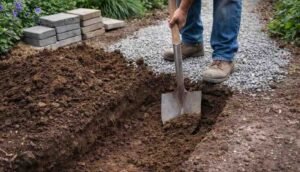
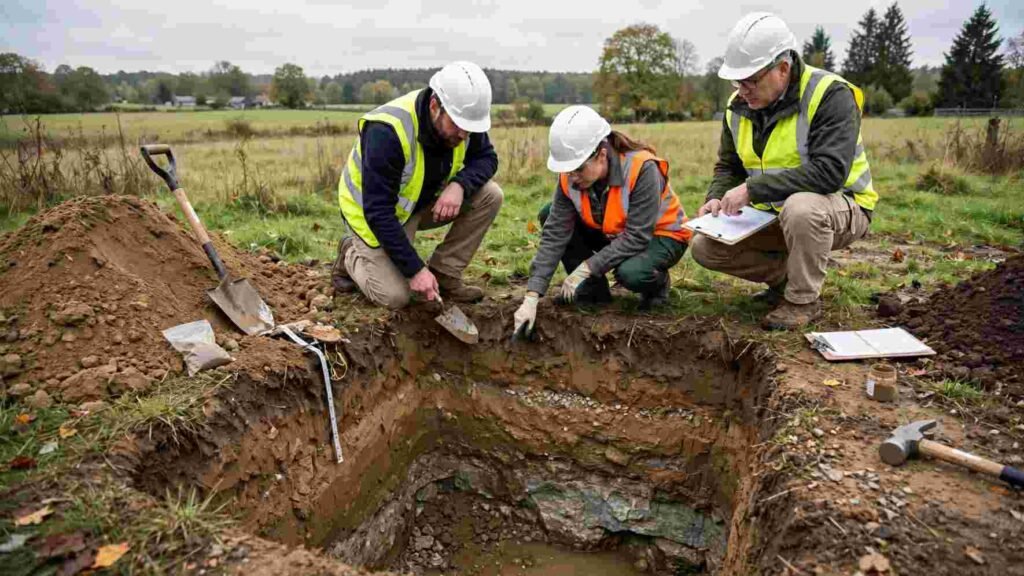
Once you’ve planned your path, it’s time to dig. The depth you dig depends on the material you’ve chosen. For a gravel path, digging around 2 inches deep will suffice, but for pavers or bricks, you’ll need to dig 6 to 7 inches to create a stable base.
Lay Landscape Fabric
Next, you’ll want to lay down a weed barrier fabric. This fabric helps prevent weeds from sprouting through your lawn, which keeps your walkway looking neat and tidy. It’s especially important if you’re using loose materials like gravel or mulch.
Install Edging
Edging helps define the path and keeps loose materials from spilling out. You can use metal, plastic, or stone edging to secure the sides of your walkway. This step is essential for both aesthetics and functionality.
What Materials Should You Choose for Your Walkway?
There are many materials available, and the one you choose will depend on your style, budget, and how much time you’re willing to spend maintaining your walkway. Here’s a breakdown of the most popular options:
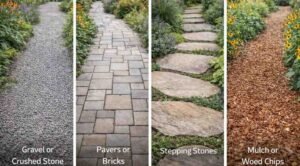
Gravel or Crushed Stone
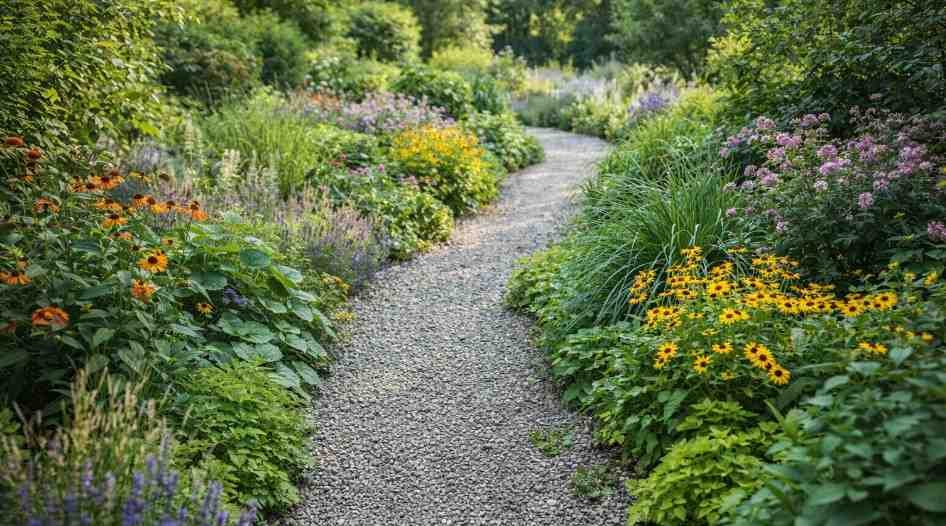
Gravel is a budget-friendly choice that works great for drainage. It gives your walkway a natural, rustic feel, but it can shift over time. To prevent this, you can use stabilizing grids underneath the gravel to keep everything in place.
Pavers or Bricks
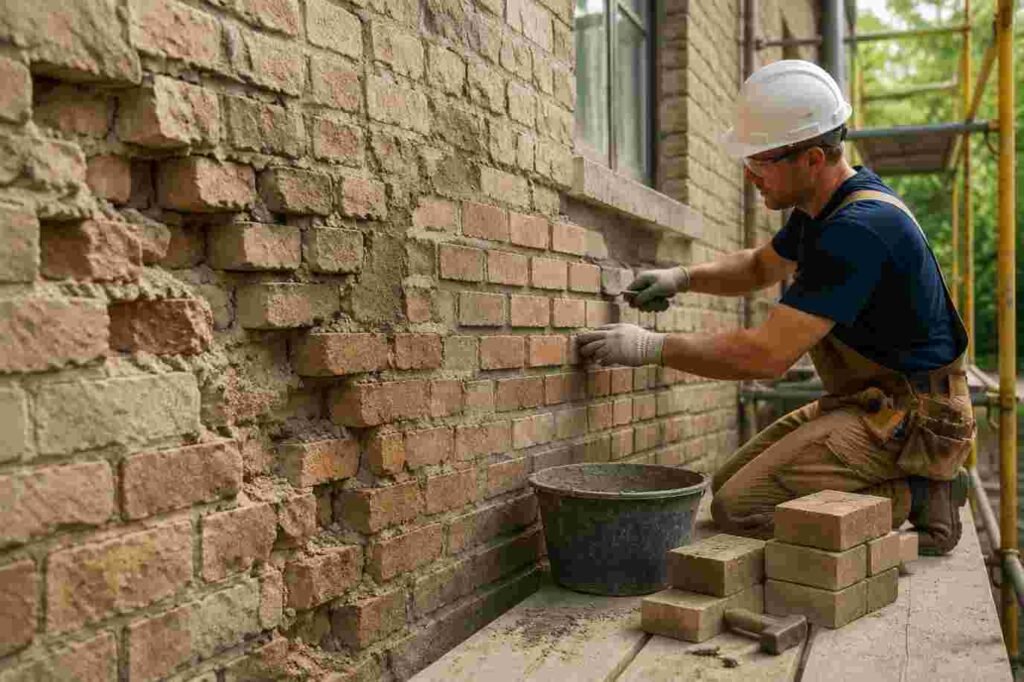
Pavers and bricks are a great option for a formal look, and they’re ideal for high-traffic areas. They require a stable base of sand and gravel to ensure they stay level. While more labor-intensive, they’re durable and can last for many years with proper care.
Stepping Stones
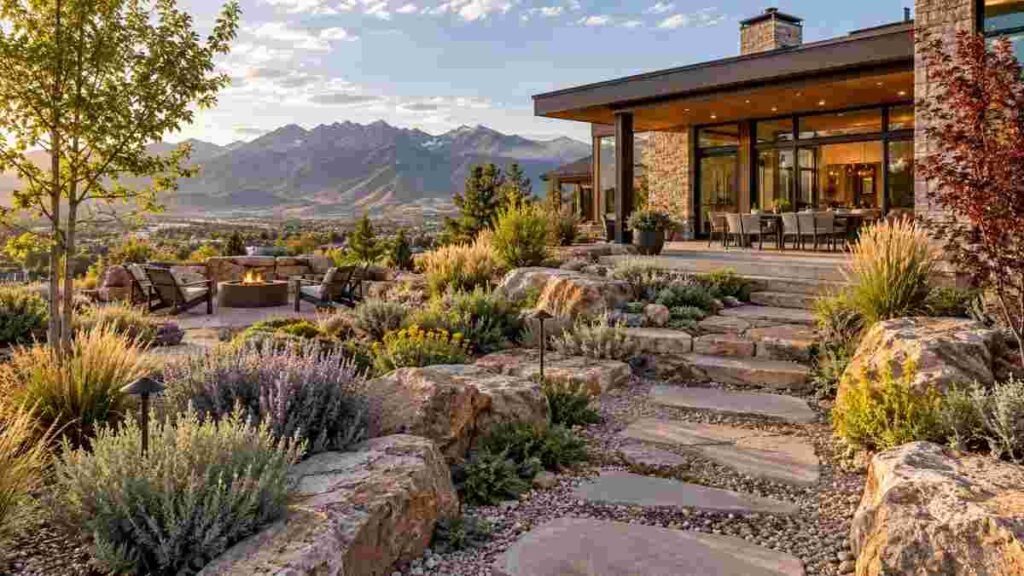
Stepping stones are perfect if you’re looking for a simple, low-maintenance option. Space the stones 18 to 24 inches apart, and you’ll have a natural, elegant walkway that’s easy to install.
Mulch or Wood Chips
Mulch gives your garden a casual look and is perfect for a DIY project. It’s inexpensive and easy to work with, but it does require annual replenishing as it decomposes.
How to Build a Garden Walkway Step-By-Step
Now that you’ve chosen your materials and prepared the ground, it’s time to start building! Here’s how to build garden walkways, step-by-step.
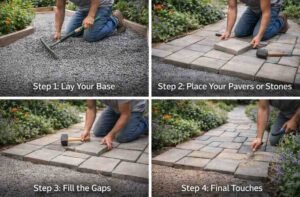
Step 1: Lay Your Base
Start by spreading a layer of crushed stone or sand over your prepared ground. This will serve as a base for the material you’ve chosen. Make sure the base is level and evenly distributed to provide a stable foundation.
Step 2: Place Your Pavers or Stones
If you’re using pavers, start laying them down along your path, beginning at one end and working your way to the other. For stepping stones or gravel, place them as you go, ensuring they fit snugly together.
Step 3: Fill the Gaps
Once your stones or pavers are in place, fill in the gaps with sand or small pebbles. This will lock the stones in place and add to the overall aesthetic. If you’re using mulch, simply spread it evenly around the stones.
Step 4: Final Touches
After your walkway is laid, give it a good cleaning to remove any excess dirt or dust. If you’re using pavers, you can apply polymeric sand to the joints and mist it with water to lock the sand in place. Finally, plant some ground covers like creeping thyme along the edges to soften the look of your path.
Frequently Asked Questions
1. How Much Does It Cost to Build a Garden Walkway?
The cost can vary depending on the materials you choose. Gravel and mulch are more affordable, while pavers or bricks may cost more due to the materials and extra preparation needed. On average, expect to spend anywhere from $2 to $15 per square foot.
2. How Long Does It Take to Build a Garden Walkway?
Building a garden walkway can take anywhere from a weekend to a couple of weeks, depending on the size of your project and the materials you’re using. For a small gravel or mulch path, you might finish in a day, while pavers or bricks might take longer.
3. Can I Build a Garden Walkway Without Digging?
Yes! If you don’t want to dig, you can install stepping stones directly on the grass or soil. Simply place a weed barrier beneath the stones and fill in the gaps with mulch or decorative pebbles for a natural, minimal-effort path.
4. How Do I Prevent Weeds From Growing Through My Path?
Using a weed barrier fabric under your walkway materials is the best way to prevent weeds. If you’re using pavers, ensure that the joints are filled with polymeric sand, which helps seal out weeds while keeping the pavers in place.
Walk Your Way to a Beautiful Garden
And there you have it—how to build garden walkways that will elevate your outdoor space! Whether you go for the charm of a gravel path or the sophistication of pavers, the process is easier than you think.
Remember, it’s all about planning, selecting the right materials, and taking your time to lay down a solid foundation. Your garden walkway is more than just a path; it’s a reflection of your personal style. So, grab your tools, and start walking your way to a more beautiful backyard!