Damaged masonry is easy to underestimate. A small crack, a loose joint, or a stained wall can look like a localized problem, but masonry is often telling a larger story about movement, moisture, age, or incompatible past repairs. The real question is not whether a wall has damage. It is whether the damage is isolated enough for a simple fix or widespread enough to justify masonry restoration.
The wrong response can create repeat failures. A patch may hide the visible symptom while the underlying issue keeps working through the structure. A stronger approach looks at the material, the cause, and the extent of deterioration before deciding what comes next. That is the kind of judgment Abstract Masonry brings to projects where durability, historic character, and structural performance all have to be considered together.
The Core Difference Between a Repair and Restoration
A simple repair is usually appropriate when the damage is narrow, stable, and clearly contained. Think of a single cracked brick, a small area of mortar loss, or a minor chip in stone that has not affected neighboring material. In those cases, the goal is often to restore function or appearance without disturbing the rest of the wall.
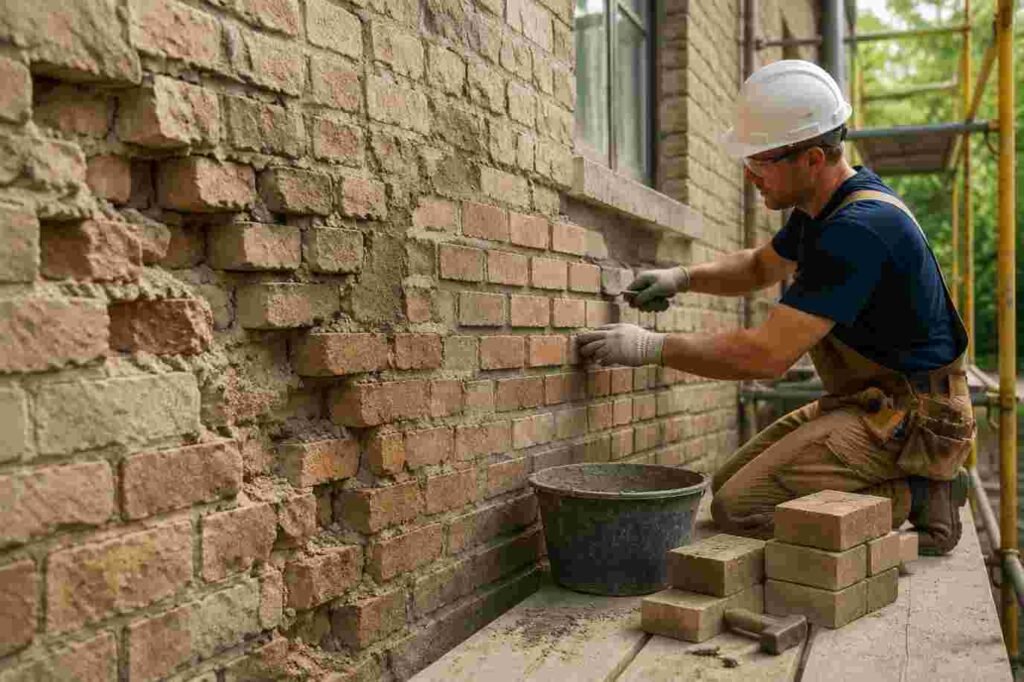
Restoration becomes the better choice when the damage is not just cosmetic. If deterioration is advancing, if the original material is failing in multiple areas, or if a prior patch has not solved the problem, the work needs to go deeper. Masonry restoration addresses the system behind the damage, not just the visible surface.
For Abstract Masonry, that often means evaluating mortar, units, moisture entry, structural movement, and the compatibility of previous repairs. A wall does not fail in a vacuum. It fails because something about the assembly, exposure, or past intervention has shifted.
When Localized Damage Is Still a Repair
A repair can still make sense when:
- The affected area is small and clearly isolated
- The surrounding masonry is sound
- There is no sign of active moisture intrusion
- The crack or defect is stable over time
- The original material can remain intact with a limited intervention
In those situations, restraint is usually the right call. Good craftsmanship is not about doing the largest possible scope. It is about matching the response to the real condition of the wall.
When Damage Has Become Systemic
Restoration is usually the more strategic path when damage shows up in patterns. That might include recurring cracking, widespread mortar erosion, multiple failed patches, or signs that a wall is absorbing water and breaking down from within.
If the original construction is historic or highly detailed, the case for restoration is even stronger because the work has to preserve both performance and character.
Abstract Masonry works in this space every day, where the issue is rarely one broken component. It is often a network of failures tied together by time, weather, or previous repairs that were too superficial to last.
The Warning Signs That Point Beyond a Surface Fix
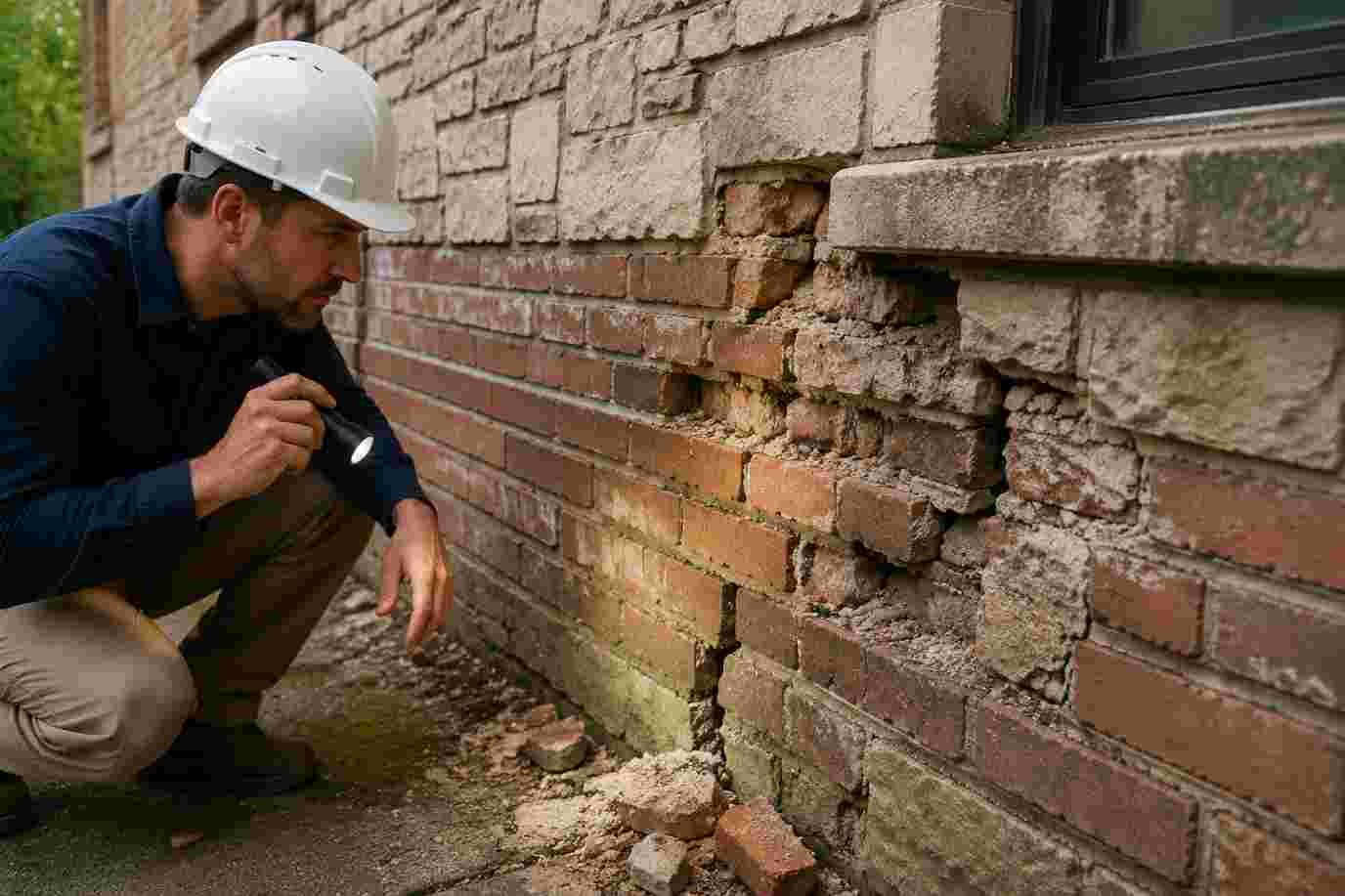
The most reliable way to decide between repair and restoration is to look for patterns. One small defect is a repair problem. Multiple related defects usually signal a broader masonry issue. That distinction is especially important in brick, stone, terra cotta, adobe, stucco, and historic concrete, where materials may age differently but still fail for the same underlying reasons.
The following warning signs often suggest that masonry restoration should be considered:
- Cracks that reappear after being patched
- Mortar joints that are soft, recessed, or missing in multiple locations
- Spalling, flaking, or surface loss across several units
- Persistent dampness, staining, or efflorescence
- Bulging, separation, or movement in the wall plane
- Prior repairs that look mismatched, brittle, or incompatible
- Damage that spreads from one area to another instead of remaining contained
A single symptom is informative. Several symptoms together usually mean the wall is no longer dealing with a one-off defect. It is dealing with an active condition.
Why Moisture Changes the Decision Fast
Moisture is one of the biggest reasons a repair-only mindset fails. Water does not just stain masonry. It drives freeze-thaw damage, loosens mortar, accelerates deterioration, and can trigger hidden problems inside the wall assembly. If the source of water entry is not addressed, the damage often returns in a different location.
When moisture is contributing to masonry deterioration, the solution may need to address water intrusion at the building level rather than treating the masonry alone. How to waterproof a basement can provide homeowners with additional guidance on preventing moisture from creating recurring damage.
This is where more advanced work becomes essential. Abstract Masonry does not treat masonry as a decorative shell. The company’s approach focuses on the cause of deterioration as much as the visible effect.
That can include repointing, crack repair, cleaning, custom stone replacement, or the application of water repellents designed to protect the surface without compromising breathability.
That breathability matters. Masonry needs to release moisture naturally. If a treatment traps water inside the wall, it can make the problem worse over time. A well-selected restoration strategy protects the material while respecting how the wall was originally built.
Historic Materials Need More Than Matching Color
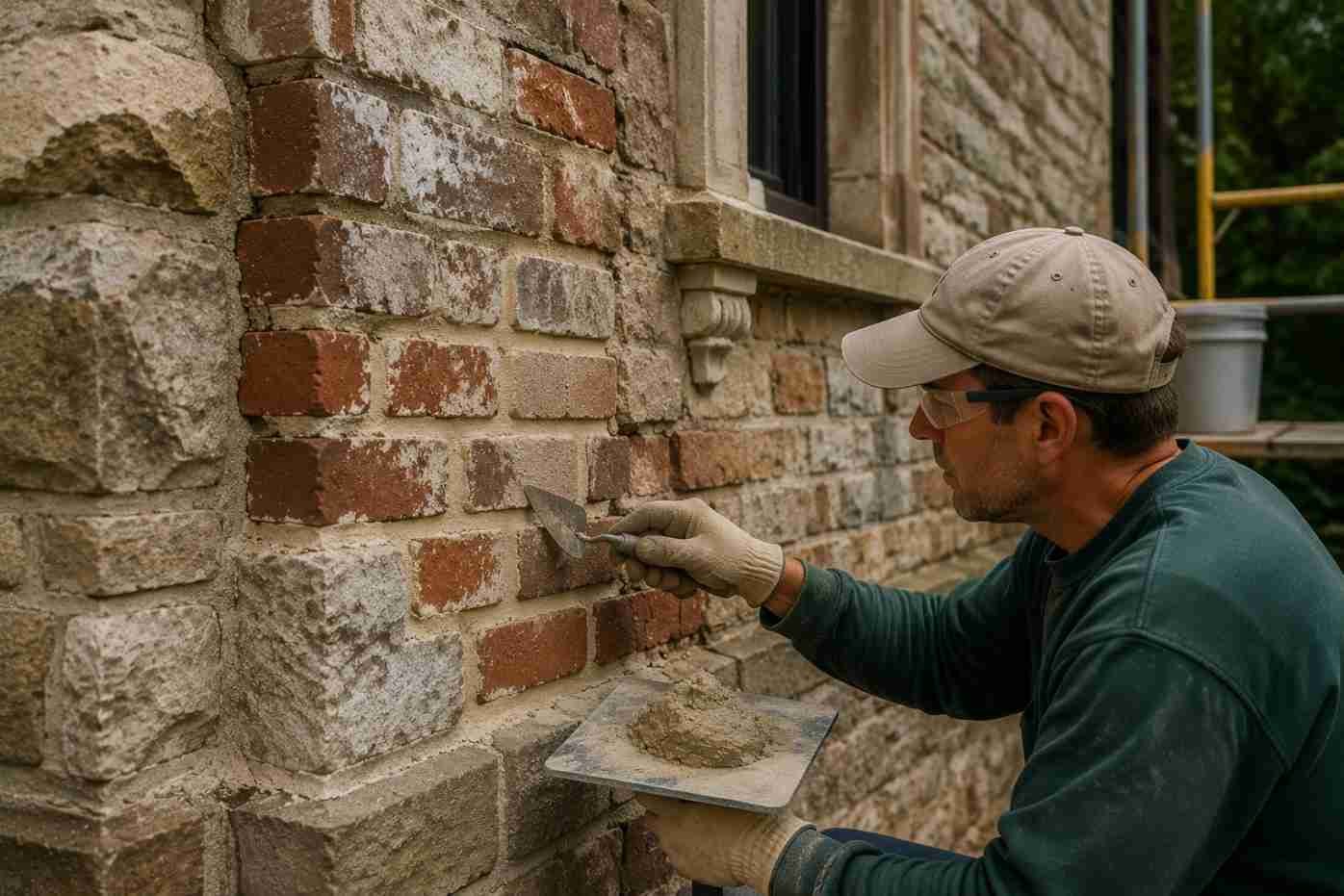
Historic masonry is especially sensitive because the original fabric is part of the value. A modern patch that looks acceptable from a distance may still be wrong in strength, texture, or permeability. Over time, that mismatch can lead to accelerated failure around the repair.
For projects involving adobe restoration, terra cotta, or historic brick and stone, Abstract Masonry’s work reflects a more disciplined approach. The objective is not simply to make the wall look repaired. It is to preserve the structure in a way that is materially and visually compatible with the original construction.
How to Decide on Restoration
The best contractors do not start with a product. They start with diagnosis. They ask what failed, why it failed, and whether the surrounding assembly is still stable enough to support a limited fix. That sequence prevents overrepair in some cases and underrepair in others.
A practical restoration assessment usually considers three questions:
- Is the damage isolated, or does it follow a larger pattern?
- Is the original masonry still sound enough to remain in place?
- Will a simple repair actually stop the cause, or only hide the symptom?
If the answer to the third question is no, restoration is often the more responsible option. That may involve repointing deteriorated joints, replacing damaged units, removing incompatible coatings, or addressing moisture pathways before they create more structural loss.
Abstract Masonry’s work across major projects, including historic and commercial structures, reflects this kind of judgment. The scope is adjusted to the condition of the building, not forced into a one-size-fits-all template.
What Restoration Protects That Repairs Often Miss
A simple repair can preserve a section of masonry. Restoration aims to preserve the building’s long-term value. That difference matters most when the structure has architectural, historical, or operational significance.
Restoration can protect:
- Structural integrity, by addressing deeper deterioration
- Visual continuity, by matching original materials and finishes
- Material compatibility, by avoiding hard or impermeable patches
- Lifespan, by reducing the chance of recurring failure
- Historic character, by respecting original techniques and detail
This is why property owners often move from repair to restoration after repeated failures. The cost of doing a small fix again and again is not just financial. It can also mean increasing the risk of more invasive deterioration later.
Restoration can also be part of a broader property improvement strategy, particularly when owners are addressing aging building materials alongside efficiency concerns. Energy-efficient home upgrades can complement restoration work by improving the building’s overall long-term performance.
The Right Decision Is Usually the One That Solves the Cause
The decision between repair and restoration is not really about scale. It is about confidence. If the damage is small, stable, and truly isolated, a repair may be enough. If the problem is recurring, moisture-related, structurally connected, or spread across multiple masonry elements, restoration is usually the more strategic choice.
For older properties, masonry restoration can also be part of a larger effort to update the building while preserving its original character. How to modernize an old house often involves balancing necessary structural improvements with upgrades that respect the existing architecture.
That is the difference between treating a symptom and protecting an asset. Abstract Masonry approaches damaged masonry with that mindset: diagnose first, match the intervention to the condition, and preserve as much of the original material as possible while restoring performance.
For owners, managers, and preservation-minded decision-makers, that is the standard worth using. When masonry damage begins to repeat, spread, or threaten the building’s integrity, masonry restoration is often not the bigger move. It is the smarter one.