
When I first heard about AI in construction, I imagined robots taking over entire jobs, doing everything from laying bricks to managing projects. Honestly, I was skeptical. Could AI really revolutionize something as complex as construction?
Well, after diving into it and experiencing the shift firsthand, I’m here to tell you—AI is transforming construction in ways I never thought possible.
As someone who’s worked in construction for years, I’ve seen firsthand how tedious and time-consuming many of the traditional tasks can be. From dealing with safety concerns to managing complex schedules, there’s no shortage of challenges.
But now, AI is stepping in to help solve these problems in ways that seem almost too good to be true.
Let me take you through how AI is making a real difference in construction today.
How Is AI Enhancing Project Management?

When it comes to managing construction projects, efficiency is key. I’ve spent countless hours manually adjusting schedules, checking on resource allocation, and ensuring everything stays on track.
But in 2026, AI tools like Motion are stepping in and completely changing the game.
Motion uses AI to automatically reorganize tasks for your team based on priority and availability. This means no more scrambling to reassign tasks last minute.
It’s all done for you, saving hours of effort and minimizing the chances of missing deadlines. The best part? Motion starts at just $12/user/month, so it’s affordable for even smaller teams.
How to Use AI for Better Scheduling:
- Choose an AI-powered tool: I recommend starting with Wrike or Motion. These tools integrate with your current systems and provide powerful scheduling automation.
- Set your priorities: Input the key tasks and deadlines. The AI will calculate the most efficient use of your team’s time.
- Let AI handle adjustments: If a task takes longer than expected or if weather delays hit, AI will automatically reschedule the team, saving you the headache.
Is AI Making Construction Sites Safer?
As much as we’d like to think otherwise, safety concerns are a constant on job sites. From equipment malfunctions to human error, accidents can happen in the blink of an eye. That’s where AI is stepping in with game-changing construction tools like Spot by Boston Dynamics and Dusty Robotics and BIM tools.
Spot is a robot designed to autonomously monitor the site and check for safety violations. It uses AI-powered cameras to spot things like missing PPE or unsafe conditions. I was amazed when I first saw it in action—it’s like having an extra pair of eyes on the job 24/7.
And don’t even get me started on Dusty Robotics. These robots print building layouts directly onto concrete floors, cutting down the errors caused by manual measuring. As someone who’s spent time trying to line up measurements for layouts, I can’t stress how much time and energy this saves.
How AI Helps Maintain Safety:
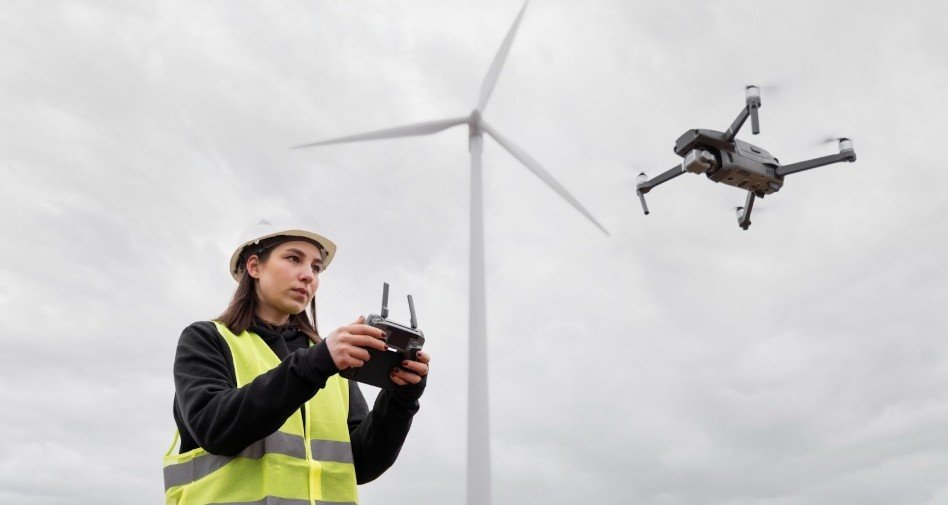
- Monitor in real-time: Use AI-powered cameras and drones to check for safety issues, structural defects, or environmental hazards as they happen.
- Automated inspections: Tools like SafetyCulture and CompanyCam can instantly analyze job site photos and flag hazards, ensuring safety inspections are more thorough.
- Track worker health: Wearable tech, like the Mate-XT exoskeleton, tracks worker health, helping identify signs of fatigue or heat stress before accidents happen.
How Is AI Transforming Site Execution?

One of the most mind-blowing advancements is the use of autonomous robots for tasks that would otherwise require significant manpower. Let’s talk about Hadrian X, a truck-mounted robot that can lay bricks for an entire house in just 1–3 days.
Can you imagine how much faster construction would be if we didn’t have to rely solely on human labor for tasks like bricklaying?
On the site where I work, I’ve seen firsthand how robots like these are not just speeding up tasks but improving precision as well. For instance, Built Robotics takes standard excavators and turns them into fully autonomous machines that perform excavation tasks with sub-centimeter accuracy.
How to Embrace Robotics in Construction:
- Invest in autonomous equipment: You don’t need a full fleet—start with specialized robots like Hadrian X for bricklaying or KUKA Robotics for welding tasks.
- Automate repetitive tasks: Focus on automating tasks like excavation and trenching. These are ideal for autonomous machines, freeing up your team for more skilled work.
- Start small: If you’re a small firm, retrofitting existing equipment with AI kits, like those offered by SafeAI, is a cost-effective way to get started.
How Can AI Help with Post-Construction?
When it comes to long-term building maintenance, AI isn’t just about construction—it’s about making sure things run smoothly for years to come. For example, in buildings like the Burj Khalifa, AI is used to monitor systems like HVAC, predicting failures before they occur.
Predictive maintenance is one of the most exciting applications of AI in post-construction. By using AI sensors, buildings can self-monitor their systems and alert maintenance teams before something breaks down.
How to Use AI for Building Maintenance:
- Install predictive sensors: In large buildings, consider installing sensors that monitor systems like HVAC or elevators.
- Use AI to predict failures: AI can analyze this sensor data to predict when maintenance is needed, saving you money on emergency repairs.
- Optimize energy usage: Tools like AI-powered energy optimization can adjust lighting and heating based on occupancy and weather, cutting energy costs by up to 20%.
FAQs: Real Questions, Real Answers
Q1: How does AI improve construction project management?
AI tools automate scheduling and resource management, making your project timelines more efficient and minimizing delays. With tools like Motion or Buildertrend, AI can predict potential issues and adjust your schedule automatically.
Q2: Can autonomous robots really replace human workers on construction sites?
While robots like Hadrian X are incredibly efficient, they’re not designed to replace human workers entirely. Instead, they handle repetitive tasks, freeing up your team to focus on higher-level work that requires skill and decision-making.
Q3: How expensive is AI equipment for small construction companies?
While AI tools like Motion and Kreo are designed to be affordable, large-scale autonomous equipment can be expensive. If you’re a small firm, start by investing in software tools for scheduling and safety, and consider retrofitting existing equipment with AI.
The Future of Construction—A More Efficient, Safer, and Smarter Industry
As I reflect on how AI is transforming construction, I can’t help but feel excited for what the future holds. These innovations are making our work smarter, safer, and more efficient.
Whether it’s AI-powered safety monitoring or autonomous bricklaying robots, the construction industry is rapidly evolving. And if you’re ready to keep up, now is the time to start incorporating these tools into your projects.
A little tip: Start small—don’t feel like you have to adopt everything at once. Pick one area where AI can make the most impact for your team, and go from there. Trust me, the return on investment will be well worth it.
What are you waiting for? The future of construction is already here!