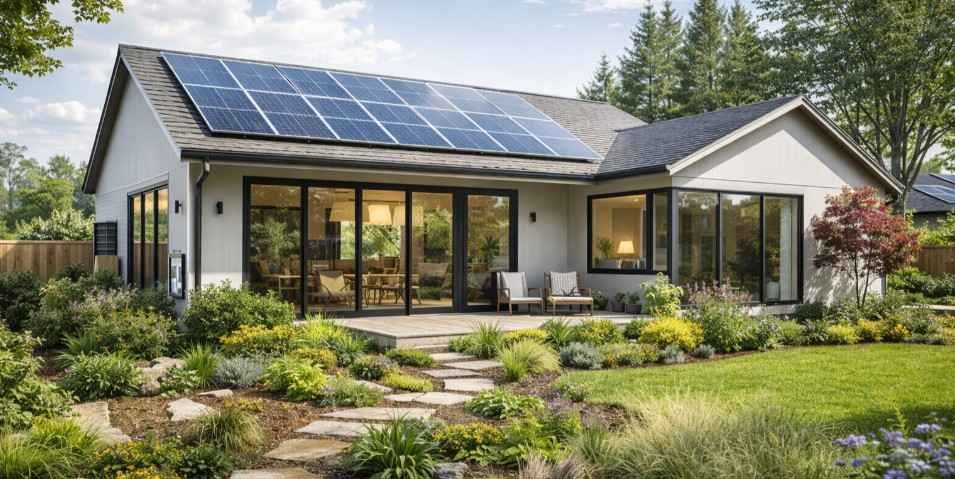
Designing a net-zero home isn’t just about slapping on some solar panels and calling it a day. It’s about creating a space that functions in harmony with the environment while significantly reducing your energy footprint. When I first started learning about net-zero homes, I thought they were only for eco-conscious billionaires with massive estates.
But the truth is, designing a home that uses as much energy as it produces is a goal anyone can strive for. Whether you’re building from the ground up or renovating, adopting net-zero home design principles can help you save energy, reduce your carbon footprint, and create a sustainable living space.
What Are Net Zero Home Design Principles?
Net-zero home design centers on a simple but ambitious goal: a house must produce as much energy as it consumes annually. Achieving this requires a “load reduction first” strategy—minimizing energy needs through architecture before adding renewable energy systems. The foundation of a net-zero home design starts with passive features like solar orientation, high-performance building envelopes, and efficient mechanical systems. From there, integrating renewable energy sources like solar power completes the design, balancing energy consumption with energy supply.
How to Design a Net Zero Home
Designing a net-zero home doesn’t happen overnight, but with careful planning and the right approach, you can create an energy-efficient, environmentally friendly space. Let’s walk through the key steps:
1. How Does Passive Design & Orientation Impact a Net Zero Home?
The first step in designing a net-zero home is to optimize its relationship with the environment. Passive design focuses on reducing energy needs by using the natural environment to your advantage.
Solar Orientation:
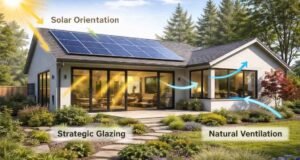
In the Northern Hemisphere, homes are often oriented with their long axis running east-west to maximize south-facing surfaces for solar gain. This not only improves the efficiency of your solar panels but also ensures that your home is getting maximum natural light, which reduces the need for artificial lighting during the day.
Strategic Glazing:
Large, high-performance windows on the south side of the house capture the sun’s warmth, while north-facing windows are minimized to prevent heat loss. Triple-glazed windows are an excellent choice for ensuring that the heat stays in during the winter and keeps out the heat during summer.
Natural Ventilation:
To reduce the need for air conditioning, the layout of the home should be designed to capture cooling breezes. Use the “stack effect,” which lets hot air escape through high vents, helping to keep the indoor air temperature comfortable without relying on electricity.
2. Why is a High-Performance Building Envelope Essential?
A “tight” building envelope is the key to a successful net-zero design. This refers to the outer shell of your home that prevents the escape of heat during the colder months and blocks out unwanted heat in warmer months.
Super-Insulation:
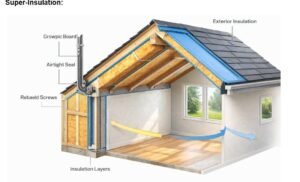
Continuous insulation in walls, roofs, and floors eliminates thermal bridges (gaps in the structure where heat can escape), which is crucial in keeping your home energy-efficient. Insulation keeps the home at a comfortable temperature, reducing the need for excessive heating or cooling.
Airtightness:
Sealing gaps and cracks in the building envelope ensures that your conditioned air stays inside. This is why net-zero homes often target performance metrics like ≤ 1.5 Air Changes per Hour (ACH50) to ensure minimal air leakage.
Advanced Windows:
Triple-pane, low-emissivity (Low-E) windows are a must. These windows manage heat transfer and prevent condensation, keeping your home comfortable while minimizing energy waste.
3. How Can Efficient Mechanical Systems Help Achieve Net-Zero?
Once the home is optimized for energy efficiency, the next step is to use efficient mechanical systems to meet any remaining energy needs.
Heat Pumps:

Air-source or ground-source heat pumps are highly efficient systems that provide heating and cooling. These systems can achieve up to 300-400% efficiency compared to traditional heating systems like furnaces, making them a must-have in any net-zero home.
Energy Recovery Ventilation (ERV/HRV):
Since net-zero homes are airtight, they need a system to ensure proper ventilation without wasting energy. ERVs or HRVs provide fresh air while recovering heat from the outgoing stale air, balancing comfort and energy efficiency.
Heat Pump Water Heaters:
These water heaters use electricity to move heat instead of generating it, making them far more energy-efficient than conventional water heaters. They’re a perfect choice for reducing the amount of electricity used to heat water.
4. How to Integrate Renewable Energy into Your Net Zero Home?
After reducing your energy needs, the next step is to produce clean, renewable energy to balance out the consumption.
Solar Photovoltaics (PV):

Installing solar panels on your roof is one of the most common and effective ways to generate carbon-free electricity. With advancements in solar technology, solar panels are more efficient and affordable than ever, and they can produce enough energy to cover a significant portion of your home’s needs.
Smart Energy Management:
The key to optimizing your home’s energy use is a smart energy management system. These systems help you monitor and control energy consumption in real-time, shifting usage to times when solar power generation is highest (like midday), reducing reliance on the grid.
Energy Storage:
For homes that generate more electricity than they consume, battery storage systems like the Tesla Powerwall can store excess solar energy for use at night or during power outages. This ensures that your home continues to function even when the sun isn’t shining.
5. What Role Do Embodied Carbon & Materials Play?
Net-zero home design isn’t just about reducing operational carbon; it also involves considering the embodied carbon in the materials used to build the house.
Sustainable Materials:
Low-carbon materials like mass timber, bamboo, and recycled steel should be prioritized. These materials not only have a lower environmental impact during their production but can also be sourced locally, reducing transportation emissions.
Life-Cycle Thinking:
The sustainability of your home should be evaluated from start to finish. This means considering the entire life cycle of the building materials—from extraction to transport to eventual demolition or reuse. By reducing the carbon footprint across the full lifespan, you’re making a more sustainable choice.
Frequently Asked Questions
1. How long does it take to recoup the investment in a net-zero home?
The payback period for a net-zero home can vary, but most homeowners can expect to recoup their initial investment in 7-15 years. This timeline can be shorter depending on government incentives, local energy costs, and how much energy your home consumes and produces.
2. Is it possible to retrofit an existing home to become net-zero?
Yes, it’s absolutely possible to retrofit an existing home to achieve net-zero status. The process involves improving insulation, upgrading to energy-efficient windows, installing a renewable energy system (like solar panels), and replacing old heating and cooling systems with more efficient models. While the upfront cost can be significant, long-term energy savings can make it worthwhile.
3. Do net-zero homes cost more to build?
Net-zero homes typically cost more upfront due to the high-performance materials, renewable energy systems, and advanced building techniques required. However, these costs are offset by lower energy bills over the long term. Plus, incentives and rebates can help reduce the initial investment.
4. Can a net-zero home be built in any climate?
Yes, a net-zero home can be built in any climate. The design will be tailored to the specific needs of the location, with strategies for passive heating and cooling that are appropriate for the climate. For example, in colder climates, extra insulation and a high-performance heating system are essential, while warmer climates might prioritize ventilation and shading.
Your Net-Zero Home Is Within Reach
Designing a net-zero home may seem like a big undertaking, but with the right principles, it’s entirely within reach. By focusing on energy efficiency first, then integrating renewable energy and sustainable materials, you’re well on your way to creating a home that’s not only good for the environment but also your wallet.
So go ahead, start planning your sustainable future today, and don’t forget to celebrate each small step you take toward a greener, more energy-efficient home.